Dryer Vent Cleaning & Repair
Serving Raleigh, Fuquay-Varina, Apex, Cary, and surrounding areas in the Triangle. Every service includes a full inspection and airflow verification with a calibrated anemometer.
Schedule Your Dryer Vent CleaningStraightforward Pricing
Dryer vent accessible without a ladder — ground-level or low exterior termination.
Dryer vent terminates at roof level or a location requiring ladder access.
All services include a full inspection, cleaning, exterior cap check, and airflow verification. Additional repair work quoted separately if needed.
Neighborhood discount: Book with 3 or more homes in the same neighborhood and everyone saves 20% off.
Your Dryer Vent Is a Fire Hazard Waiting to Happen
Most homeowners never think about their dryer vent — and that's exactly the problem. Every time your dryer runs, it pushes hot, moist air loaded with lint through a duct that runs from the back of the machine to the outside of your home. Over time, lint accumulates inside that duct. It builds up on the walls, collects at bends and transitions, and packs tightly around the termination cap at the exterior.
Lint is highly flammable. The combination of heat, restricted airflow, and lint buildup creates exactly the conditions needed for a dryer fire. According to the U.S. Fire Administration, dryers cause approximately 2,900 home fires every year — and failure to clean the dryer vent is the leading contributing factor.
A properly functioning dryer vent isn't just about efficiency — it's about keeping your family safe. This is one of the most overlooked home maintenance tasks, and one of the most important.
What Happens Without a Properly Functioning Dryer Vent
A clogged, damaged, or improperly installed dryer vent doesn't just reduce performance — it creates a cascade of problems that get worse over time.
House Fire
Lint is extremely combustible. When it accumulates in a restricted duct and the dryer runs hot, ignition can happen inside the wall — often with no warning. Dryer fires spread quickly and are difficult to extinguish because the source is hidden inside the ductwork.
Carbon Monoxide Risk (Gas Dryers)
Gas dryers produce combustion byproducts including carbon monoxide. A blocked or damaged vent can cause those gases to back up into your living space instead of exhausting outside. Carbon monoxide is colorless and odorless — you won't know it's there until it's a medical emergency.
Overheating & Dryer Damage
When airflow is restricted, your dryer has to work harder and run longer to dry a load. The internal temperature climbs beyond design limits, stressing the heating element, motor, and drum bearings. This dramatically shortens the life of the appliance and leads to costly repairs or early replacement.
Longer Drying Times & Higher Energy Bills
A clogged vent means your dryer can't exhaust moisture efficiently. Clothes come out damp after a full cycle, so you run it again — and again. Each extra cycle adds to your energy bill and puts more wear on the machine. Many homeowners don't realize their dryer is struggling until the vent is cleaned and they see the difference.
Pest Intrusion
A damaged or missing exterior vent cap is an open invitation for birds, squirrels, and snakes to nest inside your dryer duct. Nesting material adds to the blockage and creates additional fire risk. Animals inside the duct can also cause damage to the ductwork itself.
Mold & Moisture Damage
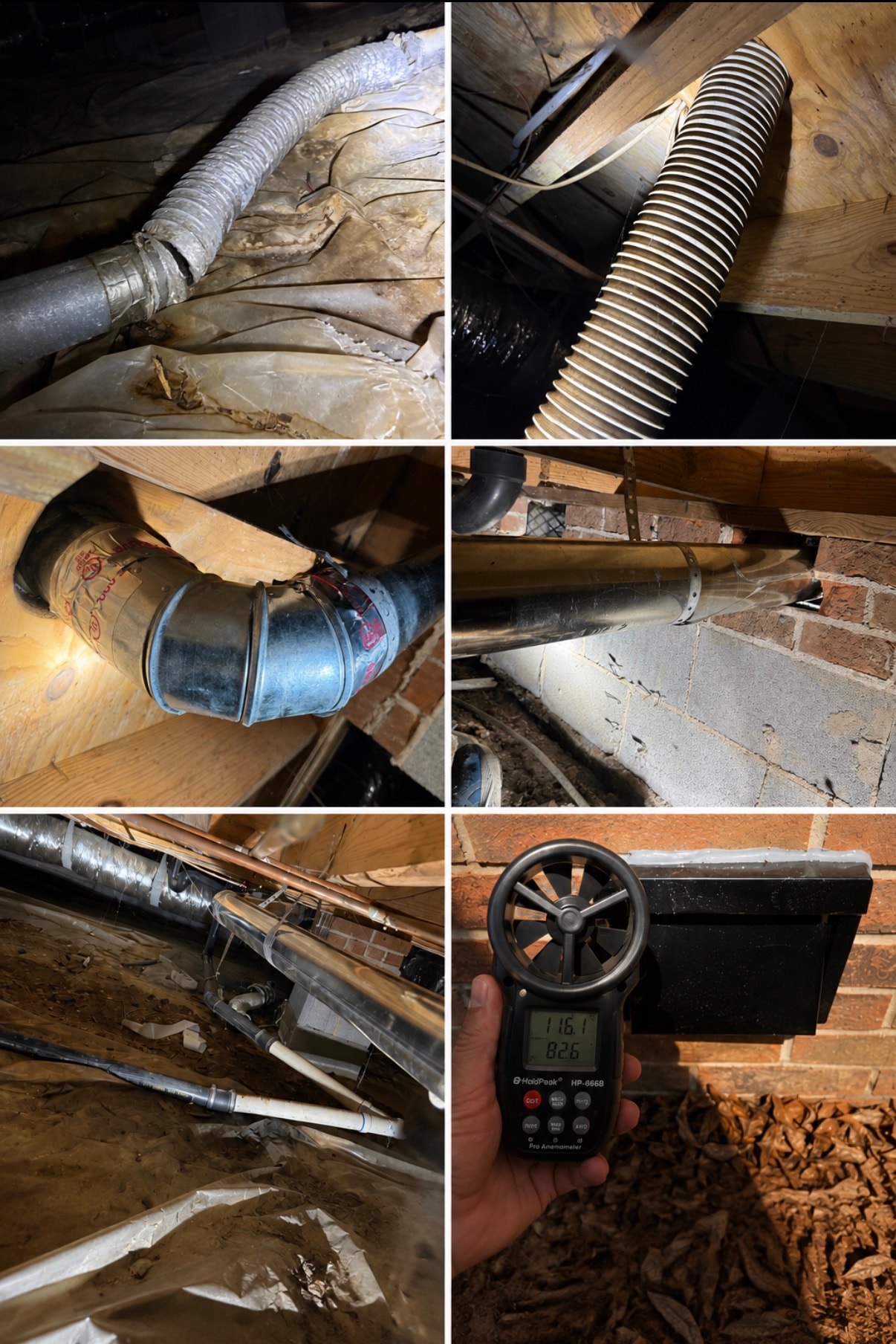
A vent that can't exhaust properly pushes warm, humid air back into the laundry area. Over time this leads to mold growth on walls, floors, and inside the duct itself. In crawlspace installations, moisture from a poorly routed vent can cause significant structural damage to floor joists and subfloor.
What's Included with Every Dryer Vent Service
I don't just run a brush through the duct and call it done. Every service is thorough, documented, and verified.
The Airflow Standard: 1,100 ft/min Minimum
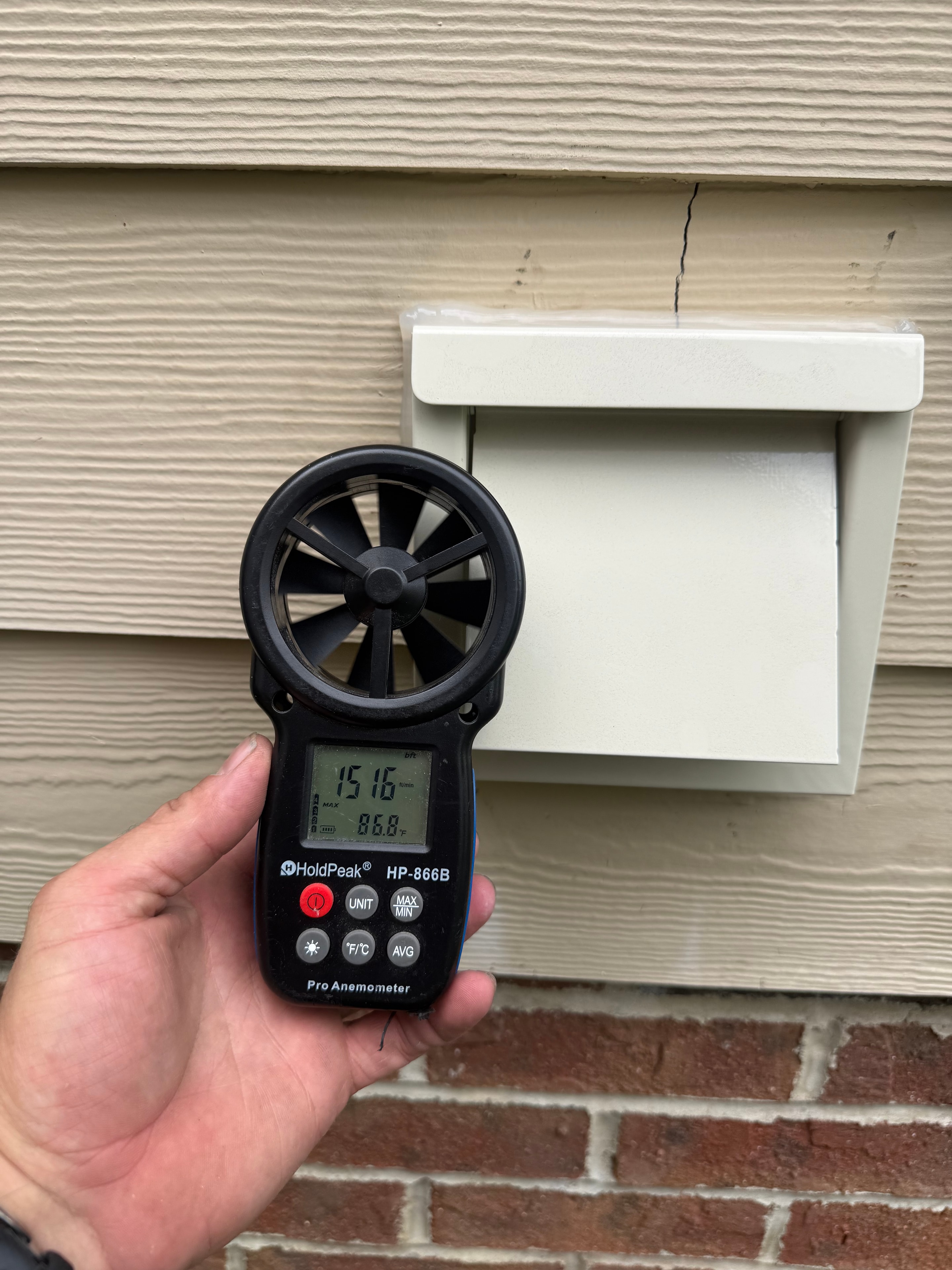
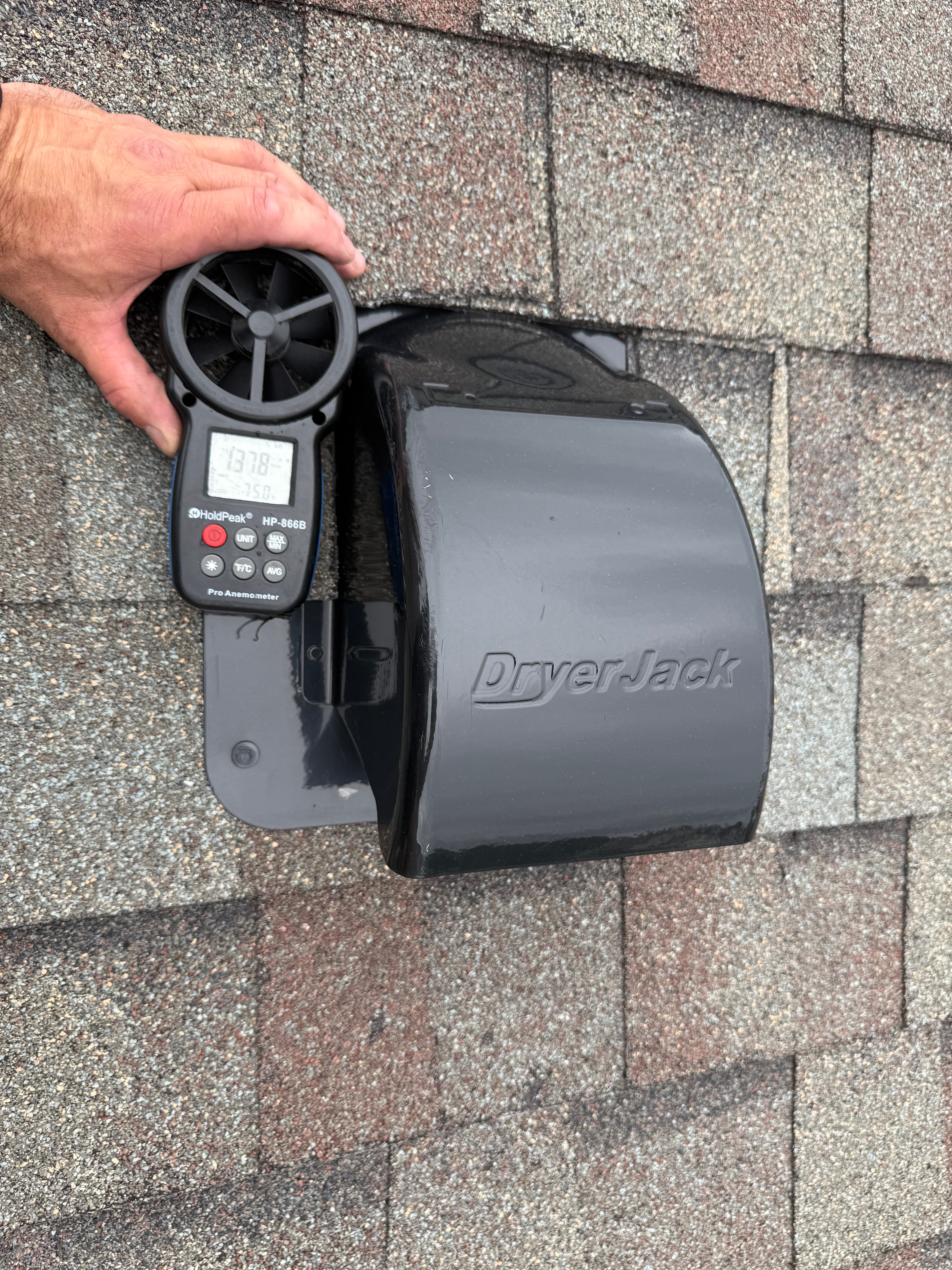
After every dryer vent cleaning, I measure airflow at the exterior termination point using a calibrated anemometer. The industry minimum is 1,100 feet per minute. If the system doesn't hit that threshold after cleaning, there's still a problem — and I won't leave without identifying it.
Most companies skip this step entirely. Measuring airflow is the only objective way to confirm the vent system is actually performing safely. A brush run through the duct doesn't tell you whether the duct is kinked, crushed, too long, or has too many bends adding restriction. The anemometer reading does. That's why I use one on every job.
Dryer Vent Projects
Ready to schedule your dryer vent service?
Schedule Your Dryer Vent CleaningHave Questions About Dryer Vent Cleaning?
Visit our dryer vent FAQ for answers to the most common questions homeowners ask.